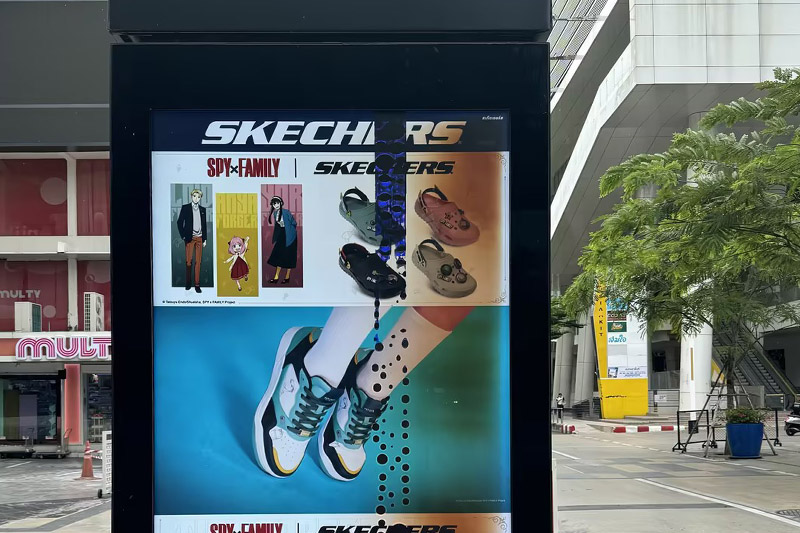
In the realm of outdoor digital signage technology, LCD screens are widely used due to their high brightness, low power consumption, and vibrant colors. However, as these technologies become more prevalent, the impact of outdoor environments on LCD screens has become increasingly significant. The issue of screen blackouts, particularly during prolonged exposure to direct sunlight in summer, has emerged as a pressing challenge. This blog will explore the causes of this phenomenon and provide expert recommendations for prevention.
The Impact of Sunlight on LCD Screens
Sunlight consists of visible light, infrared rays, and ultraviolet (UV) rays, with UV rays having the highest energy. Prolonged exposure to strong UV radiation can severely affect LCD screens. The high-energy UV photons can cause the following damage to liquid crystal molecules:
Chemical Bond Breakage in Liquid Crystal Molecules: The high energy of UV photons can break the chemical bonds in the long chains of liquid crystal molecules, causing molecular fragmentation. This disruption in molecular alignment impairs the screen's ability to respond to electrical signals, affecting display performance.
Decrease in Electrical Resistance and Increase in Power Consumption: Short-term exposure to strong UV rays can lead to a decrease in the electrical resistance of the LCD components and an increase in power consumption. This change means that liquid crystal molecules require more energy to maintain normal display operation, exacerbating their operational strain.
Reduction in Threshold Voltage: Prolonged UV exposure can lower the threshold voltage of liquid crystal molecules. A reduced threshold voltage means that the molecules become less sensitive to driving voltages, making it difficult to maintain stable molecular alignment and impacting the display quality.
Screen Yellowing, Brightness Reduction, and Black Spot Formation: When UV damage causes liquid crystal molecules to cease functioning, the screen can exhibit yellowing, reduced brightness, and, in severe cases, permanent black spots. These black spots not only impair the display of advertisements but also degrade the overall visual quality of the screen.
Temporary Recovery and Permanent Damage: Liquid crystal molecules might temporarily recover their functionality when temperatures drop. However, repeated cycles of high temperatures and UV exposure can lead to permanent damage, rendering the LCD screen inoperable and resulting in permanent black spots.
How to Prevent LCD Screen Blackouts
To address the issues mentioned above, industry experts and engineers have proposed several solutions to mitigate or prevent the impact of sun exposure on LCD screens:
Use of UV-Blocking Coatings or Filters: Applying UV-blocking coatings or filters to the surface of the LCD screen can effectively block a portion of UV rays from reaching the liquid crystal layer. This reduces direct UV damage to the liquid crystal molecules and extends the screen's lifespan.
Application of AR Glass: Utilizing Anti-Reflective (AR) glass can effectively block UV rays and reduce light reflection. AR glass achieves UV protection through specific UV-absorbing materials or coatings, significantly reducing UV damage to the LCD screen. Additionally, AR glass enhances display performance by minimizing reflections and glare, improving screen visibility.
Optimized Heat Dissipation System: Designing an efficient heat dissipation system is crucial for preventing LCD screens from overheating. Employing advanced cooling solutions such as additional ventilation channels, high-performance fans, or liquid cooling systems can effectively lower the operating temperature of the LCD screen and prevent heat-related damage.
Selection of High-Temperature Resistant LCD Materials: Using LCD materials specifically designed for outdoor environments can improve the screen's resistance to high temperatures and UV exposure. These materials are specially treated to maintain stable physical properties under high temperatures, reducing the risk of molecular chain breakage and alignment failure.
Regular Maintenance and Cleaning: Regular cleaning and maintenance of the digital signage’s cooling system and screen surface are essential for ensuring proper operation. During maintenance, check for scratches or damage to coatings and promptly repair or replace damaged components to prevent direct UV exposure to the liquid crystal layer.
How CNLC Approaches Outdoor LCD Reliability
For outdoor LCD digital signage, CNLC considers sunlight protection as part of an integrated system design rather than relying on a single protective component.
Key engineering considerations include:
Thermal management: Internal airflow and heat dissipation are considered to help control heat accumulation during prolonged operation.
High-brightness LCD: High-brightness configurations are used for applications requiring visibility under strong ambient light.
Optical protection: Suitable optical structures can help reduce reflections and provide UV protection depending on the product configuration.
Temperature control: Cooling components and control strategies can be selected according to the expected operating environment.
Outdoor enclosure design: Dust and water protection are considered together with thermal and structural requirements.
Environmental validation: Outdoor display designs can be evaluated under demanding conditions such as high temperature and strong solar radiation.
CNLC has also incorporated solar-radiation testing into its outdoor display reliability evaluation to assess thermal behavior and system performance under demanding environmental conditions.
These engineering considerations are particularly relevant for outdoor LCD digital signage operating for extended periods in hot and sunny environments.
Conclusion
Outdoor LCD blackouts and dark areas in strong sunlight are not necessarily caused by a single factor. High ambient temperature, direct solar radiation, internal heat accumulation, UV exposure, strong reflections, and prolonged operation can all affect outdoor display performance.
For this reason, reliable outdoor LCD design requires more than simply adding UV protection or selecting a high-brightness panel. Thermal management, suitable components, optical protection, enclosure design, and environmental validation should be considered together.
For outdoor digital signage projects, the appropriate solution should be selected according to the installation environment, operating temperature, sunlight exposure, brightness requirements, and required protection level.
CNLC develops outdoor LCD display solutions for demanding commercial and outdoor applications, with engineering considerations covering thermal management, optical performance, environmental protection, and customization requirements.
FAQ
Why does my outdoor LCD screen go black in direct sunlight?
Strong sunlight can increase the temperature of the display and enclosure, while glare can also make the image appear darker. If black areas or abnormal display output persist, the panel, electronics, thermal conditions, and other components should be inspected.
Can high temperature cause an LCD screen to go black?
Excessive temperature can affect LCD performance and electronic components. Depending on the display design and operating conditions, it may result in temporary display abnormalities or other faults.
Is UV radiation the main cause of outdoor LCD black spots?
Not necessarily. UV exposure is one environmental factor, but high temperature, solar radiation, heat accumulation, component aging, and other system-level factors may also contribute to display abnormalities.
How can outdoor LCD screens be protected from sunlight?
A reliable outdoor LCD solution typically combines high brightness, thermal management, suitable optical protection, outdoor-rated components, enclosure design, and environmental validation.