what are you looking for?

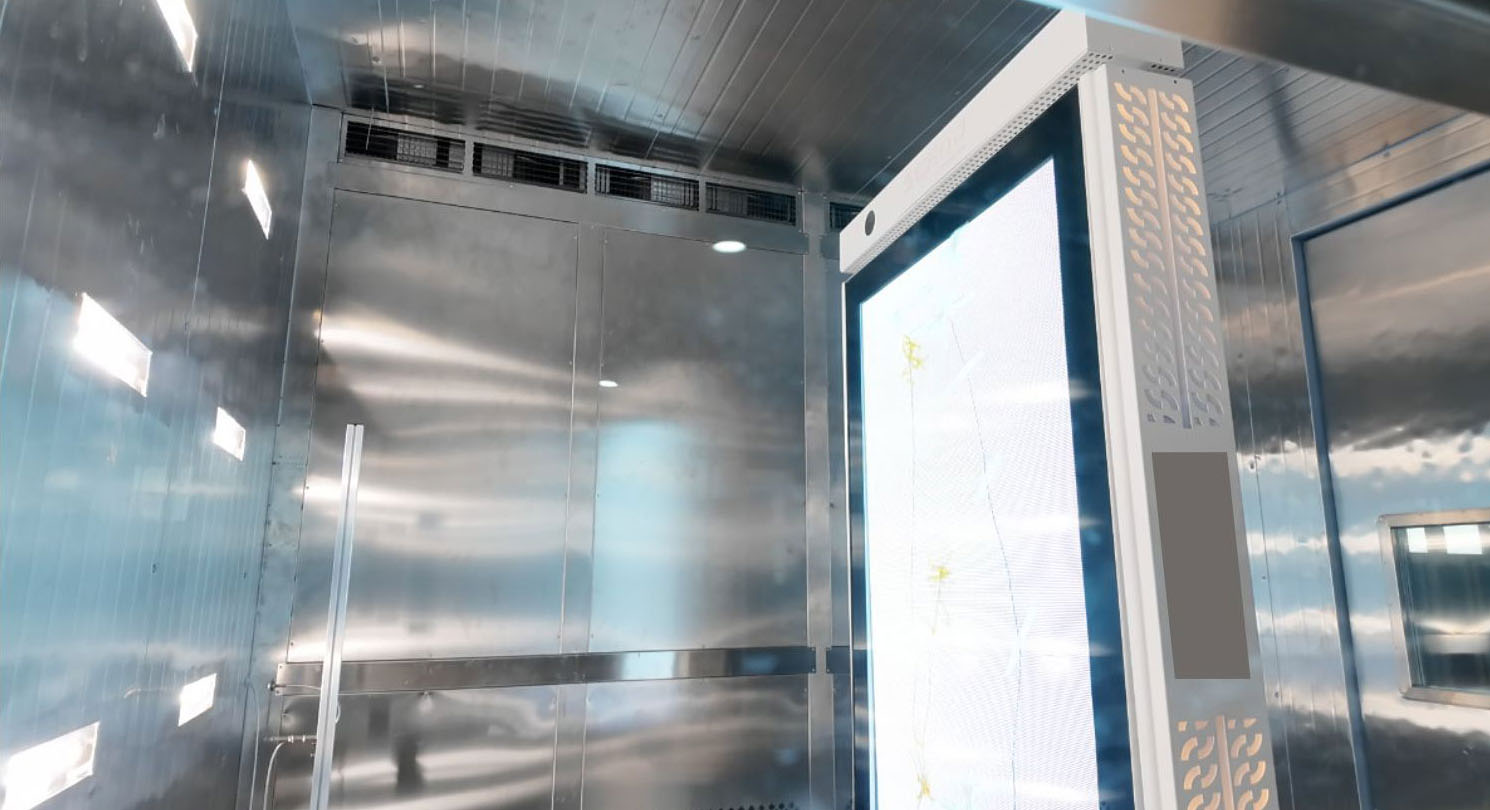
For outdoor applications exposed to high temperatures, strong solar radiation, and extended operating hours, CNLC conducted a high-temperature and high-solar-radiation validation test on its P4 double-sided outdoor LED display. The evaluation combined thermal management design, weather-resistant structural design, electrical configuration, and environmental reliability testing.
Under 55℃ ambient temperature, 1100 W/m² solar irradiance, and 4 hours of continuous operation, CNLC simultaneously monitored temperatures at multiple locations, including the LED display surface, cabinet interior, power supply, receiving card, and glass surface. During the test, the maximum measured LED surface temperature reached 89℃, providing practical engineering data to support thermal response analysis, material selection, electrical configuration, and outdoor LED project evaluation in high-temperature environments.
| Test Item | Measured Condition |
|---|---|
| Product | P4 Double-Sided Outdoor LED Display |
| Ambient Temperature | 55℃ |
| Solar Irradiance | 1100 W/m² |
| Continuous Operation | 4 hours |
| Temperature Monitoring Points | 16 |
| Maximum LED Surface Temperature | 89℃ |
1. What Challenges Do Double-Sided Outdoor LED Displays Face in High-Temperature, High-Solar-Radiation Environments?
When outdoor LED displays operate in high-temperature regions, their thermal load is affected not only by ambient temperature but also by solar radiation and heat generated by the display system itself.
For a double-sided outdoor LED display, both display surfaces are exposed to the outdoor environment, while LED modules, power supplies, receiving cards, and other electrical components are integrated inside the cabinet. This creates additional requirements for overall thermal management, structural design, and continuous operation.
Solar radiation contains UV, visible, and infrared energy. A portion of this energy can be absorbed by the display surface and structural materials and converted into heat.
As solar irradiance increases, the surface temperature of the display can become significantly higher than the ambient temperature. Therefore, ambient temperature alone is not sufficient to evaluate the thermal performance of an outdoor LED display.
At an ambient temperature of 55℃, the temperature difference between the equipment and surrounding environment becomes smaller, reducing the ability of the system to transfer internal heat to the environment.
Heat generated by LED modules, power supplies, drivers, and other components can further increase the temperature of the display surface and internal cabinet areas.
A double-sided display structure requires thermal management on both display surfaces while also considering temperature distribution inside the cabinet.
Thermal management therefore needs to consider the overall structure, airflow organization, materials, and electrical layout rather than focusing on individual heat-generating components alone.
Outdoor advertising displays are often required to operate for extended periods. Continuous exposure to high temperatures and solar radiation can place thermal loads on structural materials, coatings, LED modules, and electrical systems.
For this reason, representative environmental simulation testing is important during product development and project selection to obtain measurable temperature and operating data.
2. CNLC P4 Double-Sided Outdoor LED Reliability Solution
CNLC evaluates the P4 double-sided outdoor LED display through an integrated approach covering product structure, material selection, electrical configuration, thermal management, and environmental validation.
The overall engineering process is:
Product Design → Material Selection → Thermal Management → Environmental Simulation Testing → Multi-Point Temperature Monitoring → Data Analysis → Design Optimization
The overall product structure and internal thermal management design are developed to manage heat distribution within the double-sided display. Multi-point temperature data is used to evaluate thermal loads across different areas.
For long-term outdoor applications, the cabinet structure, surface treatment, and related materials are designed to withstand high temperatures, solar radiation, and changing outdoor conditions.
Key electrical components such as the power supply and receiving card are monitored for temperature, while continuous operating conditions are evaluated under the specified high-temperature test environment.
A solar-radiation and high-temperature environmental simulation test is used to reproduce a controlled high-temperature and high-solar-radiation condition, providing measurable engineering data for product design and project evaluation.
3. Solar Radiation Environmental Simulation Test
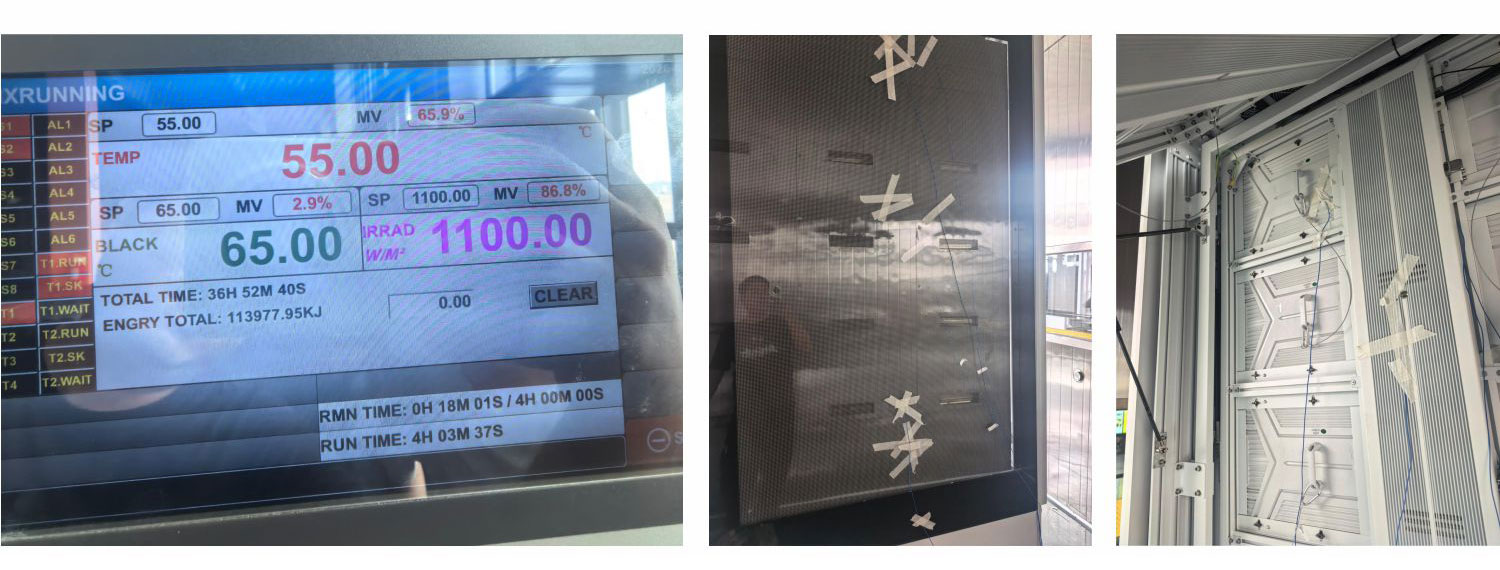
CNLC used a solar-radiation high-temperature environmental test chamber to evaluate the P4 double-sided outdoor LED display under simulated environmental conditions.
The test conditions were designed around high-temperature and high-solar-radiation outdoor applications. The evaluation covered structural condition, display operating status, temperature distribution, electrical system performance, and material surface condition under the specified test environment.
| Test Item | Parameter |
|---|---|
| Product Model | P4 Double-Sided Outdoor LED Display |
| Sample Dimensions | 2505 × 1222 × 232 mm |
| Ambient Temperature | 55℃ |
| Solar Irradiance | 1100 W/m² |
| Test Duration | 4 Hours Continuous Exposure |
| Spectrum | Full-Spectrum Solar Radiation: UV + Visible + IR |
| UV Radiation | 77 W/m² |
| Visible Radiation | 473 W/m² |
| IR Radiation | 550 W/m² |
| Peak Blackboard Temperature | Approx. 65℃ |
| Temperature Monitoring Points | 16 |
| Sampling Interval | 10 Seconds |
During the test, the sample was positioned at the center of the environmental chamber while temperature changes at multiple key locations were recorded simultaneously.
LED display surface
Rear side of LED modules
Cabinet interior
Power supply
Receiving card
Electrical box cover
Glass surface
Other key structural and electrical locations
Multi-point synchronized data collection makes it possible to observe temperature trends across different areas under high temperature and solar radiation rather than relying on a single measurement point.
4. Measured Temperature Data: Maximum LED Surface Temperature of 89℃
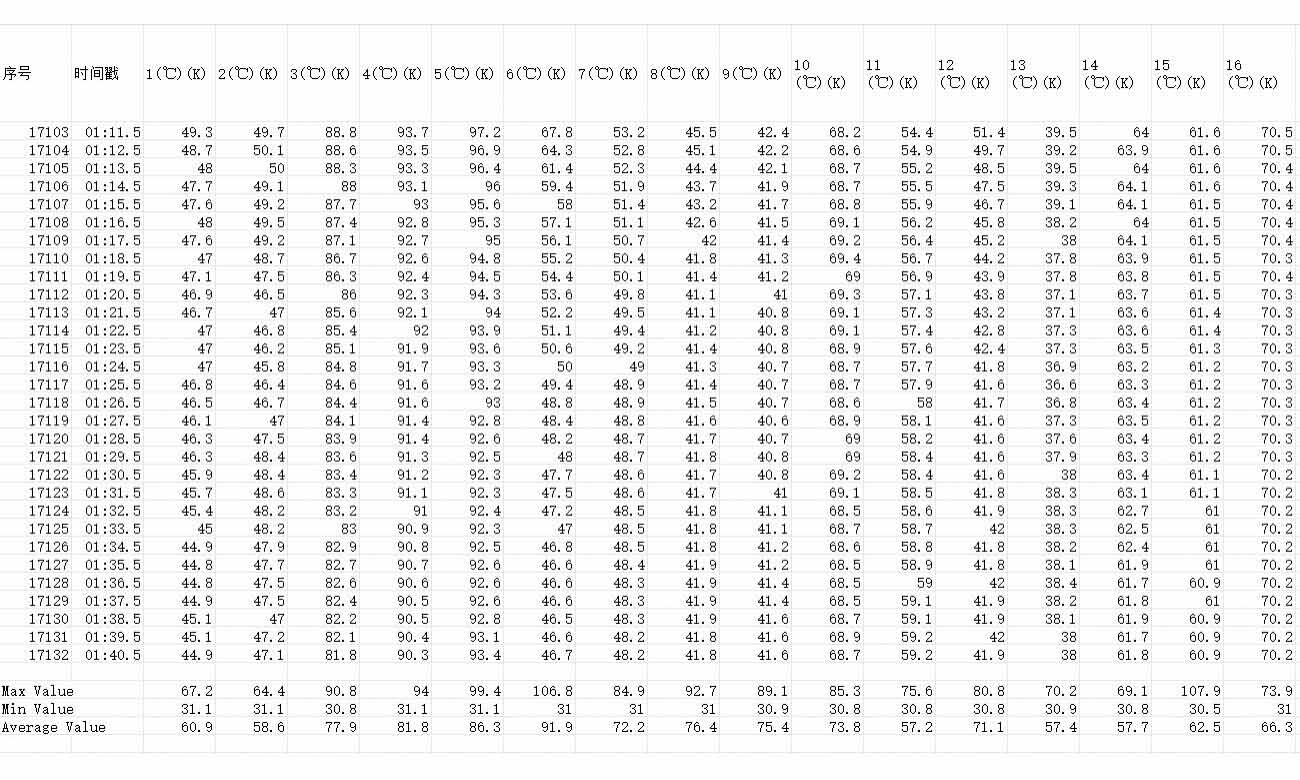
Under 55℃ ambient temperature + 1100 W/m² solar irradiance + 4 hours of continuous testing, CNLC monitored temperatures at multiple locations on the product.
| LED Surface Position | Maximum Measured Temperature |
|---|---|
| Upper Area | 89℃ |
| Middle Area | 85℃ |
| Lower Area | 75℃ |
Maximum measured LED surface temperature: 89℃
The test data shows a clear difference in temperature distribution across different heights of the display. Monitoring the upper, middle, and lower areas simultaneously provides data for analyzing the thermal distribution caused by solar radiation and internal heat generation.
Temperatures at different areas inside the cabinet were also monitored:
Upper area: approximately 67℃ average
Lower area: approximately 64℃ average
The power supply area was continuously monitored during the test, with a measured temperature range of approximately:
82–93℃
These measurements provide additional data for evaluating the thermal load of the product under high-temperature conditions and support thermal management, electrical configuration, and subsequent engineering design.
5. From Rapid Heating to a Stabilizing Trend: Product Thermal Response
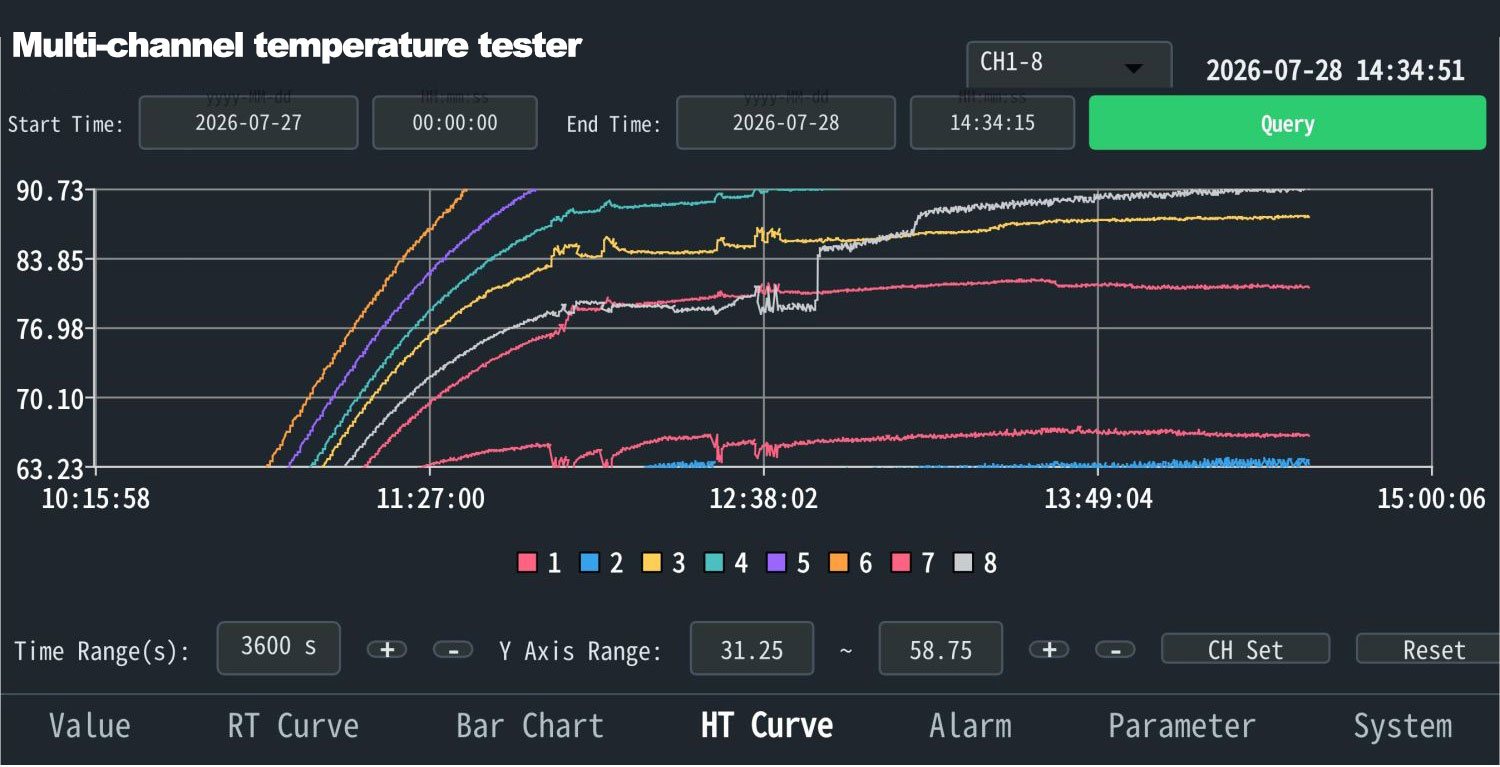
In addition to maximum temperature, the temperature trend over time provides important information about the product's thermal response under high-temperature and high-solar-radiation conditions.
Based on the 4-hour continuous test data, the temperature response can be broadly divided into the following stages:
After the test began, temperatures at the product surface and key internal locations increased rapidly as solar radiation and heat generated by the display system created the primary thermal load.
As product temperatures increased, heat dissipation became more significant and the rate of temperature increase gradually decreased.
During the later stage of the test, temperature changes at the main monitoring points became more gradual, indicating that the product's thermal response was approaching a relatively stable trend.
The complete temperature curve allows engineers to evaluate the product's thermal response throughout continuous exposure to high temperature and solar radiation rather than focusing only on the temperature recorded at the end of the test.
6. Engineering Design for High-Temperature Outdoor Applications
The test data not only helps evaluate the product's operating condition under the specified test environment but can also support structural, material, and electrical design.
The thermal load characteristics of the double-sided display structure are considered through overall structural and thermal management design to control heat distribution inside the system.
The 16 temperature monitoring points provide temperature data from different areas, supporting thermal management evaluation and structural optimization.
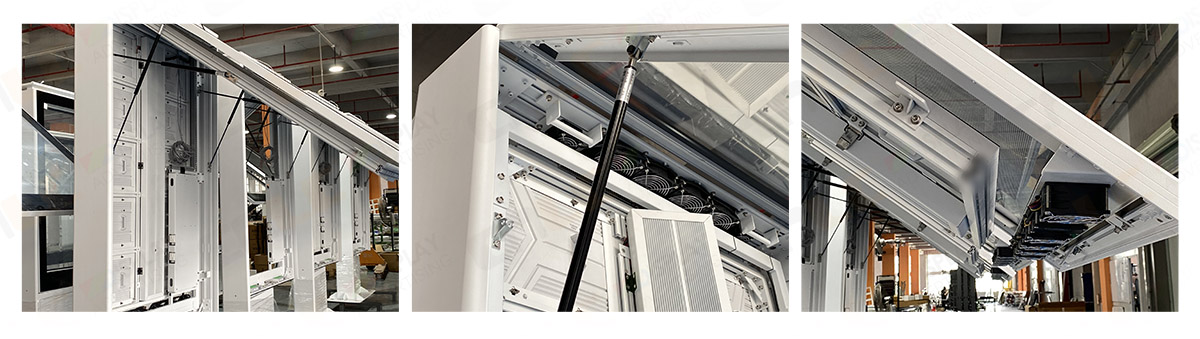
The product uses an aluminum alloy structure designed to meet the structural strength and weight requirements of outdoor equipment while providing a structural basis for overall thermal management.
The product surface uses a weather-resistant powder coating with a thickness of approximately 176 μm.
After the 1100 W/m² full-spectrum solar radiation + 55℃ ambient temperature + 4-hour continuous test, no obvious fading, yellowing, bubbling, cracking, or peeling was observed on the test sample surface.
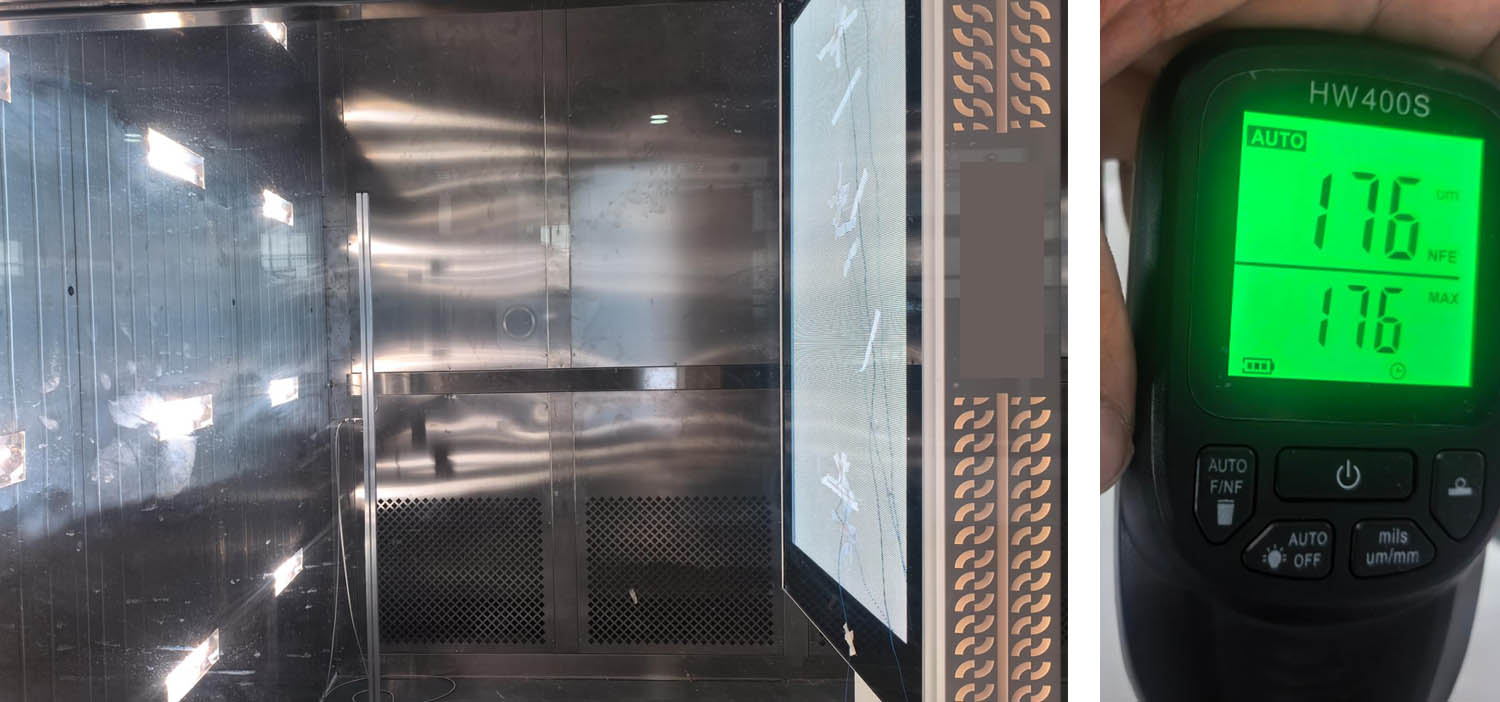
Key electrical locations, including the power supply and receiving card, were monitored simultaneously for temperature and evaluated together with continuous operating status.
Combining temperature data with operating status provides a more comprehensive view of electrical system performance under high-temperature conditions.
7. 4-Hour High-Temperature and High-Solar-Radiation Continuous Operation Verification
Throughout the test, the P4 double-sided outdoor LED display operated continuously for 4 hours at 55℃ ambient temperature and 1100 W/m² solar irradiance.
After the test and subsequent cooling, the product was inspected for appearance, structural condition, display performance, and electrical system status.
During and after the test:
No smoke or abnormal odor was observed
No obvious structural loosening was observed
No cabinet cracking was observed
No obvious structural abnormality affecting the test conclusion was observed
No obvious fading, yellowing, bubbling, cracking, or peeling of the surface coating was observed
During this 4-hour test:
The display system remained operational
No obvious flickering was observed
No black-screen condition occurred
No obvious yellowing or other abnormal display condition was observed
During the test, the power supply, drivers, wiring, and related electrical systems remained operational, with no obvious electrical operating abnormality affecting the test conclusion observed.
During the high-temperature test, the LED modules showed slight thermal deformation and changes in module gaps. These changes recovered after the product cooled.
According to the test report, this condition was considered an acceptable thermal response and did not affect the test conclusion.
This observation also demonstrates the engineering value of environmental simulation testing: materials and modules can respond to temperature changes, making it important to observe structural and module behavior during heating, sustained high-temperature exposure, and cooling.
8. Why Are Environmental Simulation Test Data Important for Outdoor LED Projects?
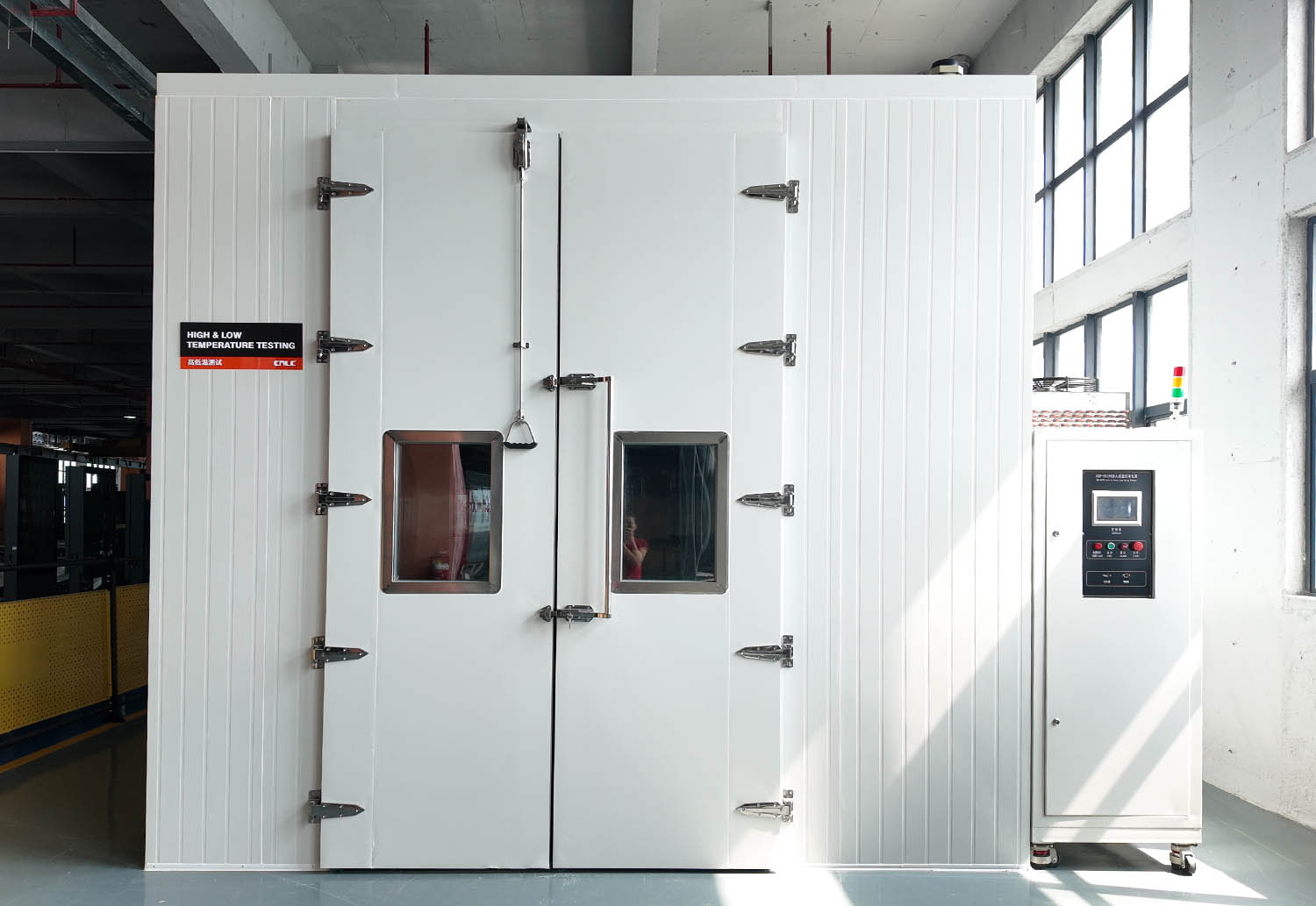
The high-temperature performance of an outdoor LED display cannot be adequately evaluated through normal-temperature power-on testing alone.
In actual outdoor environments, the product can be exposed to a combination of:
Ambient Temperature + Solar Radiation + Internal Heat Generation + Extended Operation
Environmental simulation testing therefore provides engineering data under controlled conditions that can better represent the thermal challenges of target outdoor applications.
Temperature curves and multi-point monitoring data can identify thermal load differences across different areas, providing input for structural and thermal management design.
Testing under high-temperature and solar-radiation conditions can help evaluate changes in coatings and related materials under the specified conditions.
Temperature, solar irradiance, and installation conditions vary by location. Test data can serve as an important reference for project evaluation and product configuration.
Validated environmental test data can support further product design optimization and production quality control, providing clearer engineering references for large-scale projects.
9. Applications for High-Temperature and High-Solar-Radiation Outdoor Projects
Based on the product's structural design and the environmental simulation test data, the CNLC P4 double-sided outdoor LED display can be used in a range of outdoor applications requiring extended operation, including:
Outdoor digital advertising along roads, major urban routes, and commercial streets.
Outdoor digital advertising and information displays for highways, service areas, and transportation facilities.
Digital advertising applications in airports, railway stations, bus terminals, and other high-traffic locations.
Outdoor advertising and information displays for bus stops, BRT stations, and public transportation networks.

10. From Testing to Project Delivery: CNLC Engineering Support
Environmental testing is one part of product reliability validation. For actual B2B projects, CNLC can provide further product configuration and engineering support based on specific project requirements.
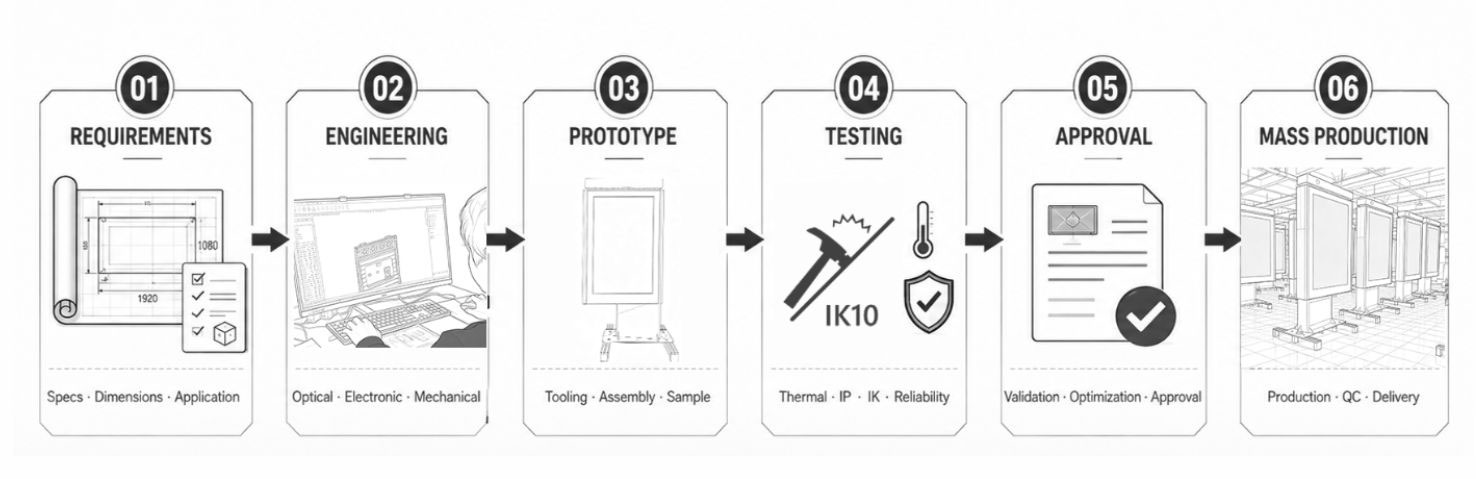
11. Providing Verifiable Engineering Data for Outdoor LED Projects in High-Temperature Regions
Outdoor LED display reliability cannot be defined by a single test. It is developed through a process covering product design, material selection, manufacturing, and environmental validation.
Engineering Design
↓
Material Selection
↓
Thermal Management
↓
Environmental Testing
↓
Temperature Monitoring
↓
Data Analysis
↓
Design Optimization
Under the test conditions of 55℃ ambient temperature + 1100 W/m² solar irradiance + 4 hours of continuous operation, the P4 double-sided outdoor LED display completed the specified high-temperature and high-solar-radiation environmental simulation test.
During the test, the maximum measured LED surface temperature reached 89℃. The display system remained operational, and after testing, no obvious abnormalities affecting the test conclusion were observed in the key structural components, electrical system, or surface coating.
These measured results provide engineering references for product design, thermal management evaluation, and project selection for outdoor LED applications in high-temperature and high-solar-radiation regions.
Need an Outdoor LED Display Solution for High-Temperature Environments?
If your project is located in the Middle East, southern North America, southern Europe, Australia, or other high-temperature and high-solar-radiation regions, CNLC can provide a project-specific outdoor LED display solution based on your actual application conditions.
Please provide:
Project Location · Display Size · Installation Environment · Operating Hours · Brightness Requirements
The CNLC engineering team can support product configuration, structural design, thermal management evaluation, and environmental reliability test planning.

 Tel : 8613728004632Tel : 8602082332833
 Email : info@cnlcdisplay.com

 STAY CONNECTED Get our news, offers, and more...